Theory test topic
Lights and fog
Questions focus on which lights to use, when, and how to avoid dazzling others.
139 questions on this topic in our bank
The rules in brief
- 1
Dipped beams in poor light
Use dipped headlights at night and whenever visibility is poor during the day.
Source: RSA, Rules of the Road
- 2
Dip for others
Switch to dipped beams when meeting oncoming traffic or following another vehicle.
Source: RSA, Rules of the Road
- 3
Fog lights only in fog
Use fog lights only when visibility is seriously reduced. Switch them off once it clears.
Source: RSA, Rules of the Road
- 4
If you are dazzled
Slow down, look towards the left edge of the road and stop if you need to.
Source: RSA, Rules of the Road
Try 8 sample questions
Tap an answer to see if you are right and read the explanation.
Score: 0/8
Question 1 of 8
How are emergency vehicles identified?
Explanation: If you hear or see an emergency vehicle approaching sounding its siren or flashing lights, be extra careful and give way if it is safe to do so.
Question 2 of 8
Why is it important to ensure that the vehicle headlights are correctly aligned?
Explanation: A driver should ensure their headlights are properly aligned so as not to dazzle oncoming drivers and also to see properly themselves.
Question 3 of 8
If a vehicle breaks down on a motorway, what should a person do?
Explanation: Move the vehicle to the hard shoulder. Park as near to the left as possible. If this is not possible, take steps to warn other drivers, such as switching on the hazard warning lights. Wear a high visibility vest. Always carry at least two in the vehicle.
Question 4 of 8
A driver notices that the wiper blades are worn. What should they do?
Explanation: Use the windscreen wipers to keep the windscreen clear of rain, spray, snow or fog. Check them regularly to ensure that they are in good working order, and replace them when they become worn, before they become ineffective.
Question 5 of 8
What should a driver do when approaching a junction normally controlled by traffic lights and the traffic lights are not lighting?
Explanation: You should always read the road ahead and be prepared to react to changing traffic situations. If the traffic lights are not working, you should approach the junction with extra care, and you should proceed only if it is safe to do so.
Question 6 of 8
What action should a driver take if the engine in their vehicle cuts out suddenly when they are driving along?
Explanation: If the engine in the vehicle you are driving cuts out, signal and steer to the side of the road. Switch on the hazard warning lights and contact the relevant breakdown service to get assistance.
Question 7 of 8
When should a driver use their vehicle’s hazard warning lights?
Explanation: Use the hazard warning lights to warn other road users of a danger ahead. For example, if a driver’s vehicle is causing an unavoidable obstruction such as being broken down, they should use the vehicle’s hazard warning lights to warn other road users of their presence.
Question 8 of 8
What does this traffic light mean?
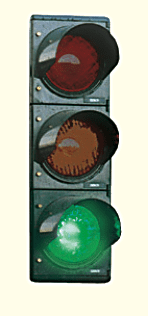
Explanation: You may proceed on a green traffic light if it is safe to do so.
Train all 139 lights and fog questions
803 questions with English and Portuguese audio. 40 free questions a day.
Other topics
- Road signs146
- Driving in bad weather57
- Eco-driving and fuel91
- Insurance, NCT and motor tax14
- Collisions and emergencies81
- Learner permit rules66
- Sharing the road with cyclists63
- Pedestrians and crossings87
- Overtaking50
- Parking rules49
- Motorway driving40
- Speed limits32
- Alcohol, drugs and fatigue33
- Roundabouts and junctions84
- Tyres, brakes and ABS91