Theory test topic
Speed limits
Limits are in km/h and depend on the road type. Signs always override the default.
32 questions on this topic in our bank
The rules in brief
- 1
Motorways
120 km/h is the default motorway limit.
Source: RSA, Rules of the Road
- 2
National roads
100 km/h is the default on national roads unless signs show less.
Source: RSA, Rules of the Road
- 3
Local rural roads
Since 7 February 2025 the default on local rural roads is 60 km/h.
- 4
Towns
50 km/h is the default in built up areas. Many streets have lower posted limits.
Source: RSA, Rules of the Road
- 5
A limit, not a target
Drive slower when weather, traffic or the road demand it.
Source: RSA, Rules of the Road
Try 8 sample questions
Tap an answer to see if you are right and read the explanation.
Score: 0/8
Question 1 of 8
Subject to the speed limit, what is the "safest" speed to drive at?
Explanation: You should always drive at a speed that allows you to stop within the distance that you can see to be clear ahead. If you don't think you could safely bring the vehicle to a stop within the range of what you can see, then you're driving too fast : slow down.
Question 2 of 8
What does this sign mean?
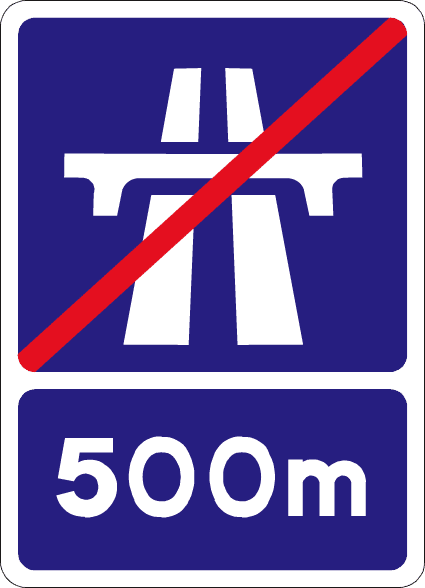
Explanation: This is a motorway information sign that tells you that the motorway will end in 500 metres ahead. Motorway rules will no longer apply, for example a lower speed limit may be applicable.
Question 3 of 8
Unless otherwise indicated, what is the maximum speed allowed for a car towing a caravan on a motorway?
Explanation: When towing a caravan on a motorway it is illegal to exceed 80 km/h, excessive speed will make such a vehicle unstable.
Question 4 of 8
Which vehicle is exempt from speed limits when being used in an emergency?
Explanation: In the course of their duty Gardaí, Fire Brigade and ambulance personnel are exempt from some traffic laws including speed limits, as long as they do not put other road users in danger. If you hear or see a Garda or emergency vehicle approaching under emergency conditions, be extra careful and give way, if it is safe to do so.
Question 5 of 8
What does this sign mean?
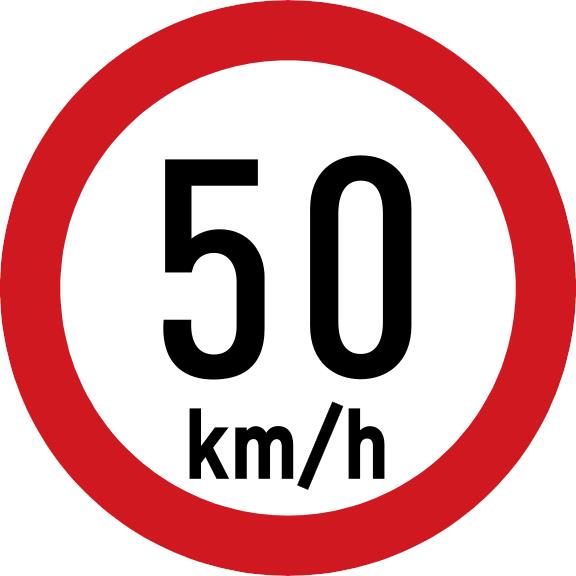
Explanation: This sign tells you that the maximum legal speed limit permitted for this section of road is 50 km/h.
Question 6 of 8
When do temporary speed limits apply at roadworks?
Explanation: Temporary speed limits at road works apply for the duration of the works. When road works are completed, normal speed limits apply.
Question 7 of 8
If it is safe to overtake a cyclist in speed zones up to 50 km/h, what is the recommended minimum passing distance?
Explanation: A driver should drive their vehicle far enough to the left to allow traffic to safely pass or overtake on the right, but not so far to the left that you are driving on a cycle lane or blocking or endangering cyclists or pedestrians. Where a driver wishes to overtake a cyclist and it is safe to do so, they should, if it is possible, give the recommended clearance depending on the speed limit area they are in.
Question 8 of 8
What does this sign mean?
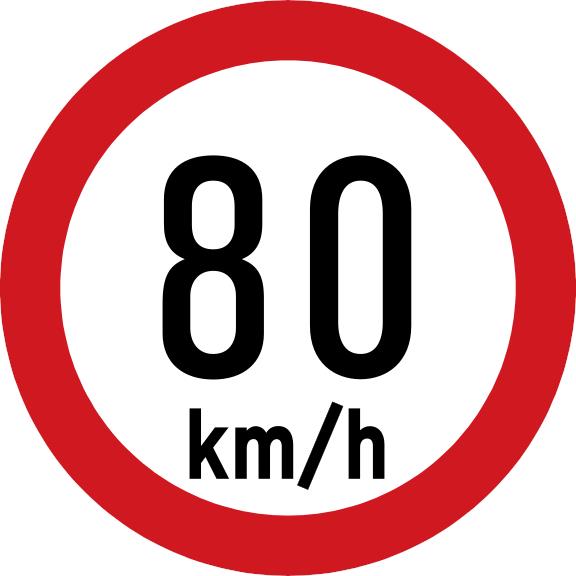
Explanation: This sign tells you that the maximum legal speed limit permitted for this section of road is 80 km/h.
Train all 32 speed limits questions
803 questions with English and Portuguese audio. 40 free questions a day.
Other topics
- Road signs146
- Lights and fog139
- Driving in bad weather57
- Eco-driving and fuel91
- Insurance, NCT and motor tax14
- Collisions and emergencies81
- Learner permit rules66
- Sharing the road with cyclists63
- Pedestrians and crossings87
- Overtaking50
- Parking rules49
- Motorway driving40
- Alcohol, drugs and fatigue33
- Roundabouts and junctions84
- Tyres, brakes and ABS91